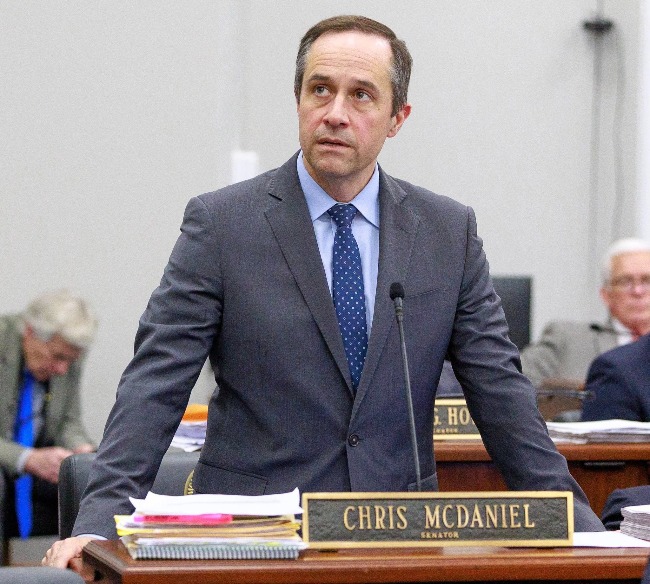
General Assembly Sends Biennial Budget to Governor
April 3, 2026The Kentucky General Assembly passed the state’s budget for the next two fiscal years. Each of Kentucky’s three branch budget bills, 2026 HB 500, 2026 HB 503, and 2026 HB 504, was agreed on after free conference committees were formed to resolve any differences between the Senate and House’s versions of the bills.
HB 500, the Commonwealth’s biennium budget, appropriates General Fund dollars in the amounts of $15.4 billion in FY 2026-27 and $15.6 billion in FY 2027-28 to establish conditions for operating, maintaining, and supporting the executive branch of government. 2026 HB 503 is the legislative branch budget, and 2026 HB 504 is the judicial branch budget.
The Kentucky General Assembly says they crafted the biennium budget with disciplined and methodical precision, explaining that their fiscal discipline and responsibility since 2014 has resulted in the Commonwealth being able to craft a budget that remains true to their priorities: fully funding the pension systems, funding education at record levels, appropriating funds to the budget reserve trust fund, and ensuring the state is in a secure position to tackle any unforeseen challenge.
The budget will fully fund all defined calculations and provide pay increases of 2% for state employees in both fiscal years. The budget provides less funding for Medicaid Services than the Governor’s proposed budget, but the General Assembly has set aside $290 million that could be used to cover benefits if the state experiences a shortage.
The budget proposal will reduce governmental expenditures by 4% in FY 2026-2027 and 7% in FY 2027-2028. However, many executive branch departments and programs are exempt from budgetary cuts. Some of these include:
- The Kentucky Department of Veteran Affairs, the Department of Revenue, and the Office of the Secretary of State
- Medicaid Benefits, Appropriations otherwise not Classified (ANOC), and Judgements
- Commonwealth Attorneys and County Attorneys
- Adult Corrections and Juvenile Justice
- Support Education Excellence in Kentucky (SEEK) and Learning & Results Services (LARS)
- Local Jail Support
- Registry for Election Finance
- Three Post-Secondary Institutions and the Post-Secondary Performance Fund
- Family Resource and Youth Service Centers, Voluntary Services, Community Services, and Local Facilities
Adamant about controlling the growth in spending, Kentucky lawmakers noted that the budget should reflect the state’s “needs over wants.”
The budgetary items included in the state biennium budget that benefit cities include:
- One-time General Fund appropriations of $5 million in each fiscal year to complete the state-wide deployment of Next Generation 9-1-1 (NG-9-1-1) Services.
- Sufficient funding to implement the provision for School Safety (2024 SB 2). $10 million in KLEFPF funds in each fiscal year to fund the Body Armor Grant Program.
- General Fund appropriations of $905,000 in FY 2026-27 and $587,000 in FY 2027-28 to create a new computer forensics laboratory in Western Kentucky.
- General Fund appropriations of $720,000 in FY 2026-27 and $697,500 in FY 2027-28 for the County Fair Grants in the Local Agricultural Fair Aid Program.
- Restricted Fund appropriations of $639,500 in FY 2026-27 and $439,500 in FY 2027-28 to support an Artificial Intelligence Initiative.
- Carry forward language for the Kentucky Product Development Initiative (KPDI) General Fund appropriation (2022 HB 1).
- Sufficient funding to implement the provisions of the Siting and Construction of Nuclear Energy Facilities (2024 SJR 140) and the Energy Planning and Inventory Commission (2024 SB 349). $15 million in FY 2026-27 of the funds allocated under 2024 HB 1 will be allocated to the Energy Planning and Inventory Commission.
- General Fund Appropriations of $1.44 million on FY 2026-27 and $1.39 million in FY 2027-28 for the Operation UNITE program.
- Kentucky Law Enforcement Foundation Program Fund (KLEFPF) payments of $4,653 in FY 26-27 and $4,746 in FY 27-28 for each full-time participant, and $2,327 in FY 26-27 and $2,373 in FY 27-28 for each part-time participant. This represents a 2% increase from FY 25-26.
- Restricted Fund appropriations of $15 million in FY 2026-27 and $10 million in FY 2027-28 to be paid to the City of Middletown to construct a firing range for statewide law enforcement training use.
- Restricted Fund appropriations of $5 million in FY 2026-27 to be paid to the city of Louisville to construct a driving track for statewide law enforcement training use.
- $11.5 million in KLEFPF funds in each fiscal year to support funding for School Resource Officers.
- Restricted Fund appropriations of $1.036 million in FY 2026-27 for the acquisition of mobile data terminals and docking stations for KSP. This will be funded by the excess proceeds from the sale of state-owned real property operated by the Department of Juvenile Justice.
- The Nuclear Reactor Site Readiness Program will fund three proposals that are deemed a necessary government expense (NGO) and will be paid for from the General Fund Surplus Account or the Budget Reserve Trust Fund Account, and will not exceed $75 million over the FY 2026-28 fiscal biennium.
- Firefighters Foundation Program Fund (FFPF) payments of $4,653 in FY 26-27 and $4,746 in FY 27-28 for each qualified professional firefighter. This represents a 2% increase from FY 25-26.
- $15,300 in each fiscal year for each qualified volunteer fire department.
- Restricted Fund appropriations of $750,000 in FY 2026-27 and $1.5 million in FY 2027-28 to support the modernization of the pension administration system for KPPA.
- General Fund appropriations of $1.3 million in FY 2026-27 and $1.6 million in FY 2027-28 to support staffing and operations for driver testing at three existing regional driver’s licensing offices.
- General Fund appropriations of $15 million in each fiscal year for the Center for School Safety.
- The state budget will now head to the Governor’s desk for his signature or veto.
A graph outlining the budget’s line-item appropriations of interest to cities can be found here.
2026 HB 900 Provides One-Time Appropriations for Local Projects
The Kentucky General Assembly also approved 2026 HB 900, a $1.7 billion “one-time appropriations” bill that funds numerous local projects, water and sewer projects, and economic development projects across the state from the Budget Reserve Trust Fund (BRTF). The bill funded numerous local projects that pertain to both regional and local airports, riverports, economic development, and utilities.
Larger, state-wide projects include:
- $25 million in each fiscal year to support the Kentucky Product Development Initiative (KPDI). 2026 SB 197 specifies that the Kentucky Association for Economic Development may be reimbursed up to $180,000 each fiscal year for technical support and evaluation services.
- $11.4 million in fiscal year 2026-27 to provide grants to General Aviation projects. The funds are to be distributed equally among eligible airports.
- $45 million in each fiscal year for the Kentucky Water and Wastewater Assistance for Troubled or Economically Restrained Systems Program.
- $5 million in each fiscal year to Housing.
- $2.5 million in each fiscal year to the Affordable Housing Trust Fund.
- $40 million in each fiscal year to be distributed to support approved mega-development projects of at least $10 million.
- $50 million in each fiscal year to support the Government Resources Accelerating Needed Transformation (GRANT) Program. 2026 SB 197 requires that $1.1 million of the funds are appropriated for administrative expenses and shall not lapse.
- $75 million in FY 2026-27 and $155 million in FY 2027-28 to support construction-ready projects in the 2026-28 Biennial Highway Construction Plan.
- $7.5 million in each fiscal year to implement the Short Line Infrastructure Preservation Pilot Project to preserve and enhance existing rail lines and corridors for business attraction and modernization.
- $15.1 million in FY 2026-27 and $14.5 million in FY 2027-28 to improve public riverports within Kentucky. No local match is required.
Kentucky lawmakers stated that the bill is a product of responsible budgeting that permits the Kentucky General Assembly to use taxpayer dollars for community investment. The final bill was an increase in the original proposal that would spend approximately $800 million over the biennium.
The bill will now head to the Governor’s desk for his signature or veto.
A graph highlighting many of the projects important to cities within the bills can be found here.
The Kentucky General Assembly Passes Revenue Bill
2026 HB 757, the state revenue bill, was also passed. It outlines numerous tax and administrative changes within the Commonwealth. The changes that may impact cities include:
Sunset of the State’s Tax Increment Financing (TIF) Programs
The legislation sunsets the state’s three TIF programs beginning on the effective day of the act. However, the sunset language only applies to new TIF projects and all projects that are currently under one of the state’s TIF programs will not be impacted. No existing TIF projects may be amended or have their activation date extended.
Current TIF Programs
A permanent fix to currently enacted TIFs that are impacted by the lowering of the state’s income tax was not included. However, the legislation does extend the timeframe for state tax revenues when calculating modified new revenues for income tax to 2048, and it amends the formula for calculating modified new tax revenue. The new formula will divide the individual income tax rate of 5% by the individual income tax rate for the calendar year in which the new revenues for the income tax are being computed. The result will be subtracted by 1, multiplied by 25%, and then added to 1.
The legislation also amends the definition for new development areas within Louisville TIF districts to include a development area that has existed for 30 years and may be extended for a period not to exceed an additional 25 years.
2025 HB 606 Corrections
The bill also provides clean-up language for 2025 HB 606 from the prior session relating to the creation of regional industrial taxing districts. It clarifies that governing bodies of local governments constituting a multicounty region must provide written notice to all local governments with territory wholly or partially in the boundaries of a multicounty region no less than 30 days before entering an interlocal agreement to develop real estate as part of a regional economic development project.
Territories used in a regional economic development project can be organized into a taxing district to 1) provide for establishment, operation, and maintenance of the district and governmental services therein; 2) pay the debt service on bonds issued to finance the cost of infrastructure development in the district; and 3) invest in future regional economic development projects located in the jurisdiction of any local government that is a party to the interlocal agreement. The amendments provide for the creation of a board of trustees to control and manage the affairs of the district. Territory within the district may be subject to annexation without the consent of the governing bodies of all the local governments party to the interlocal agreement.
Importantly, the amendments clarify that cities are not required to be a part of the district, and that cities located within the district’s geographic boundaries can still impose a local occupational license fee. However, if part of the district is located within city jurisdiction, it may not impose an occupational license fee until all cities party to the interlocal agreement approve of the imposition of the occupational license fee and the rate. People who pay both city and county license fees can credit their city license fee against their county license fee.
HB 757 also provides that wage assessments may be imposed upon salaries, wages, commissions, and other compensation earned by persons within the district for work done and services performed, rendered, or conducted within the district. Any wage assessments imposed in the district will expire and cannot be imposed upon the earlier of a) 20 years after the date of imposition; b) the date bonds for the district supported by the wage assessment are retired; or c) all loans paid to the Commonwealth for infrastructure are repaid.
Kentucky Film Industry Tax Credit
The legislation extends the Kentucky film industry tax credit until July 1, 2030. A reporting requirement to the Interim Joint Committee on Appropriations and Revenue every November while the refundable credit is available is required.
Kentucky Certified Rehabilitation Tax Credit
The legislation creates a rehabilitation tax credit on qualified rehabilitation expenses beginning April 2026. The amount of the tax credit is dependent on median family income and ownership of the property. The tax credit is both transferable and refundable. Insurance companies that are claiming a tax against the insurance premium tax will not be required to pay additional retaliatory taxes. The credit cap is dependent upon the application date, and the Kentucky Heritage Council will determine the maximum credit available for taxpayers.
Property Taxes for Taxing Districts Subject to Recall
The legislation specifies that if a petition to challenge the property tax levied within a taxing district is filed, the levy will be suspended. If the petition is not challenged, it will go into effect 45 days after its passage. If the taxing district is within a county with a population of 300,000 or more inhabitants, the tax is suspended if a petition to challenge the levy has been filed. If no petition has been filed, the levy will go into effect 50 days after its passage.
Establishment of the Residential Housing Infrastructure Fund
The legislation creates the Residential Housing Infrastructure Fund, which will provide low-interest loans to local governments for building, upgrading, renovation, or expansion of infrastructure owned, maintained, or operated by the local government. 2026 HB 900 provided an initial appropriation to the fund of $5 million in both FY 2026-27 and FY 2027-28.
Kratom Sales and Penalties
The legislation bans the manufacturing, distribution, sale, and dispensing of kratom, kratom products, or any kratom extracts in the Commonwealth. Any processor or retailer who is found to be in violation will pay increased civil penalties of $5,000 for a first offense and no more than $10,000 for a second offense.
Multi-Housing Construction by KHC
The legislation specifies that any property that is acquired and leased by the Kentucky Housing Corporation may include new construction that would result in an increase of 48 units or more of residential multifamily housing must have written consent of the mayor and county judge executive prior to acquisition and lease.
Municipal Interlocal Gas Utility
The legislation creates municipal interlocal gas utilities which are interlocal agencies whose membership is only composed of city governments formed for the purpose of constructing and operating a gas utility system that is capable of acquiring, distributing, transmitting, furnishing, or selling natural gas to industrial and commercial customers. The legislation specifically states that these agencies shall not provide natural gas to residential customers unless the service is furnished at rates and a minimum monthly charge as determined by the Kentucky Public Service Commission or if it provides natural gas to a utility that then provides natural gas to residential customers. The bill outlines the governing body of the municipal interlocal gas utility in which city representation is required.
Exemption on Coal Exports Extension
The bill amends the eligibility for a refund of taxes on severed coal within the Commonwealth if it is transported directly to a market outside the United States, allowing a refund for transportation to both Canada and Mexico. The refund process is extended to 2028 and now permits severed coal in the amount of 2,500,000 tons that is exported through the United States to markets outside the United States and within North America for the refund process.
Impacts of the Elimination of the Penny by the US Mint
Due to the discontinuation of the penny by the US Mint, the legislation addresses how to satisfy debts owed to cities and local government entities. Cash transactions are to be rounded to the nearest five-cent increment when pennies are not available and for the final calculation of bills, invoices, taxes, and fees. Noncash transactions will not be impacted.